Post Graduate Diploma in Piping Engineering (2:00pm to 6:00pm): 7th April 2026
Post Graduate Diploma in Piping Engineering (7:30pm to 9:30pm): 7th April 2026
Post Graduate Diploma in Piping Engineering (2:00pm to 6:00pm): 7th April 2026
Post Graduate Diploma in Piping Engineering (7:30pm to 9:30pm): 7th April 2026

ETI
January 23, 2026

Many engineers begin their professional journey with site-based roles, where they gain valuable hands-on experience in construction, erection, testing, and commissioning. While this exposure is important, site jobs often involve long working hours, frequent travel, and physical challenges. As careers progress, many professionals look for roles that offer technical growth, stability, and better work-life balance. Transitioning from site execution to design engineering is a smart move—and a structured diploma program can make that transition smooth and successful.
A PG Diploma in Piping Engineering is a specialized program focused on training engineers in the design, layout, and engineering of industrial piping systems. The course emphasizes how piping systems are planned, routed, and documented during the design phase of industrial projects. It is well-suited for mechanical engineers, diploma holders, and site professionals who want to shift into office-based design, coordination, and engineering roles across process industries.
Site engineers often reach a stage where they seek more predictable work schedules and long-term career scalability. Design roles allow engineers to work at the planning and decision-making stage of projects rather than only at the execution level. With design positions, professionals apply their field knowledge to create efficient layouts, solve engineering problems, and coordinate with multidisciplinary teams, making their experience more impactful and less physically demanding.
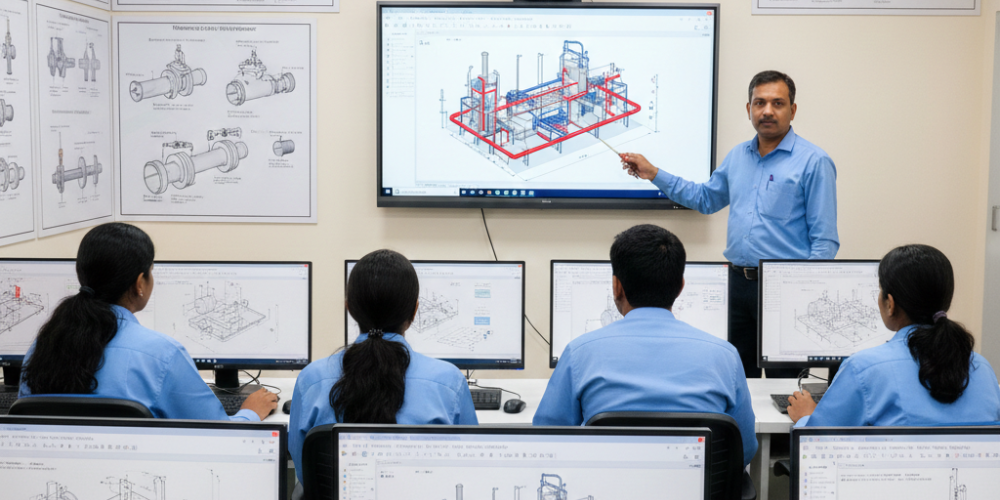
The program focuses on developing strong design fundamentals required in the piping industry. Learners gain knowledge of piping components, material specifications, equipment layout concepts, and routing practices. The curriculum also includes understanding P&ID diagrams, piping standards, and preparation of drawings used for fabrication and construction.
Practical exposure helps learners understand how real site conditions are converted into engineering drawings and design documents. This makes the transition from site to design roles much easier for professionals with field experience.
After completing the program, professionals can move into roles such as Piping Design Engineer, Piping Layout Engineer, Design Coordinator, or Project Engineer. Opportunities exist in EPC companies, engineering consultancies, oil & gas industries, power plants, chemical plants, and industrial infrastructure projects. Engineers who combine site experience with design expertise are highly valued, as they bring both practical understanding and technical accuracy to engineering teams.
Upgrade your skills and open doors to stable, high-growth design roles in piping engineering with this comprehensive diploma program.
Get in touch, or Contact us for Admission